Oh, The Horror…

By Elizabeth Speth

poison 1

I am in agony.  Burning, itching, weeping, wretched agony.

I am the victim of a natural disaster, a silent and beautiful menace.  The name of the villain in this piece?  Toxicodendron diversilobumPacific poison oak, western poison oak.   Rhus diversiloba.  By any name, this rose is bad, bad, bad.

I know how it happened.  I visualise my mistake as I slather myself with salve.  I curse the memory as I absently begin scratching a new spot.  Why is there never a roll of barbed wire lying around when you need one?

I was horseback riding on the beach, and took a shortcut through some downed trees and brush to a higher trail in the hills.  Shortcuts are always a bad idea.

Poison oak, how I dread the heroin high of scratching you, that brief second of ecstasy I will be chasing obsessively as my life deteriorates all to hell because of you.

Everyone’s got a remedy.  I’m not even going to bother discussing them.  Calamine lotion. Oatmeal.  Deodorant.  Commercial preparations.  Baking soda.  Vinegar.  Rhinoceros urine.  None of them work.

Nothing stumps this woody vine, this twining, monstrous tendril, this author of my misery that thrives everywhere near my home.  It likes wooded areas, coastal and chaparral environments.  It grows lush in shady and dappled light, but full sun is fine too.  Nuclear annihilation? No problem.  Poison  oak loves that.

poison 3

You can’t burn the stuff to get rid of it.  The surface oil, the urushiol, which is the thing that causes the horrible rash, travels like evil on sinews of smoke.  You breathe it in, you are in very bad shape, because now the horrible nastiness is inside you.

I suspect poison oak can only be killed with a wooden stake, or a silver bullet. Perhaps an exorcism.  I should try that.

The vines, which are actually quite pretty in a Ted Bundy sort of way, with their shiny leaves that change from bronze to green to a gorgeous shade of devil-red, can climb up large shrubs and tree trunks into their canopies. Then they proceed to kill the support plant by smothering or breaking it. 

If poison oak had feet, teeth and claws, it would rule the world.  It would be the only species left standing.  It would eat its young.

poison 5

Its snaky arms lie in wait in the forest.  Just a touch (which ought to be accompanied by a gong, or maniacal, take-over-the-world laughter so you at least know when it happens) causes contact dermatitis – an immune-mediated skin inflammation – in four-fifths of humans.

Never had the pleasure?  Well, gloat not, my friend.  Most, if not all, will become sensitized over time with repeated or more concentrated exposure to urushiol.  I’m talking to you, One-Fifth.  It will get you, my pretty.  And your little dog, too.

First comes the itching; then inflamed dermatitis, oozing, weeping, swelling, blistering.

I’m not going to show you a picture.  The internet is full of them, and they’re horrible.  Other-worldly.  God-awful.  I will simply invite you to imagine my flesh as an erupting volcano of flaming lava.  Only much worse than that.

Pity my friend who got it in an unspeakable place while doing what bears do in the woods.

poison 2

Don’t squat here. Leaves of three, go somewhere else to pee.

I know life is a taut line between what is good for you now, and what is good for you in the long run.

Therefore, poison oak, I will not give you the satisfaction of scratching.

I will not scratch.
I will not touch nail to skin.

Not when a hairbrush works so much better.

You are more agonizing than unrequited love, you poisonous wretch.

Well.  No.  Scratch that.

Let’s not be rash.

Unrequited love is pretty miserable.

But I suffer.  There is no relief.  I am aware of every second of every minute of every hour of my discomfort.

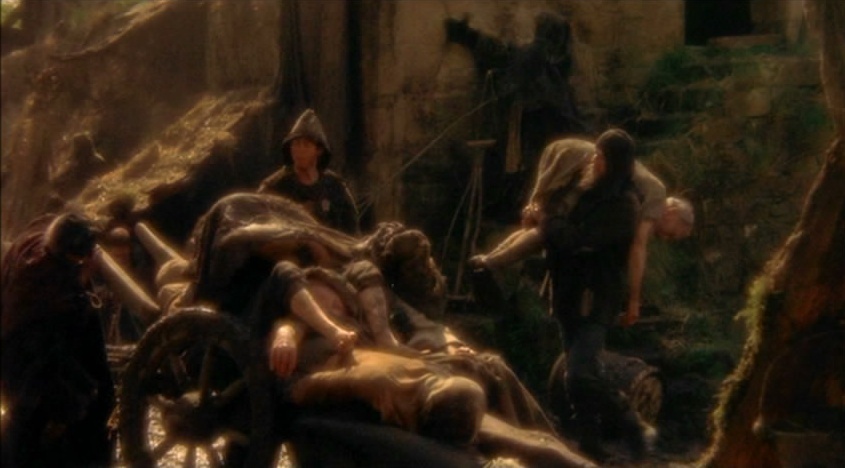
If tumbrels rolled through the streets to the accompaniment of exhortations to ‘bring out your dead’, I would heed that call.  I would fling myself into that wooden wagon, having first scratched myself thoroughly on it.

dead 2

But I will not, alas, be spared by death.  No such charity for me.

I will recover.  I will cease lurching through the streets like the proverbial shunned leper.  My skin will grow back together and smooth out, and people will speak to me again.

And, because I am not terribly smart or teachable, I will go again into the dark woods.  I will hike.  I will steer my horses through the shiny red sea.  Because I love to do these outside things, I will forget.

poison 6

Until the next time.

poison 4


A Portrait of the Artist as a Generous Man

 By Elizabeth Speth

profile 2

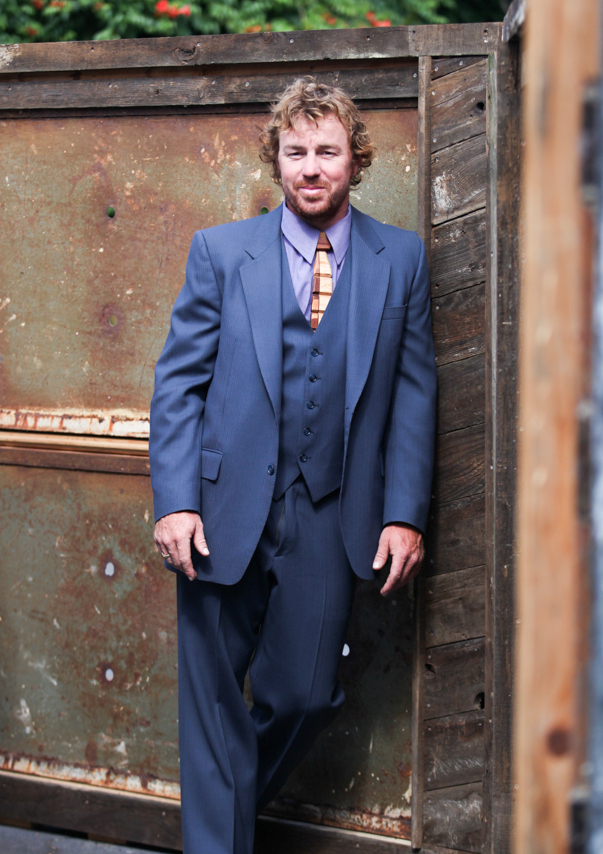
Kermit Pahkum McCourt believes everyone deserves a little (or a lot of) art. The artist in one of his signature wood tie creations.

Forgive me. I’m about to get carried away here about a beautiful thing.  This is a local story, in that one of my favorite artists is about to open his own gallery nearby, a long-overdue and well-deserved cause for celebration.

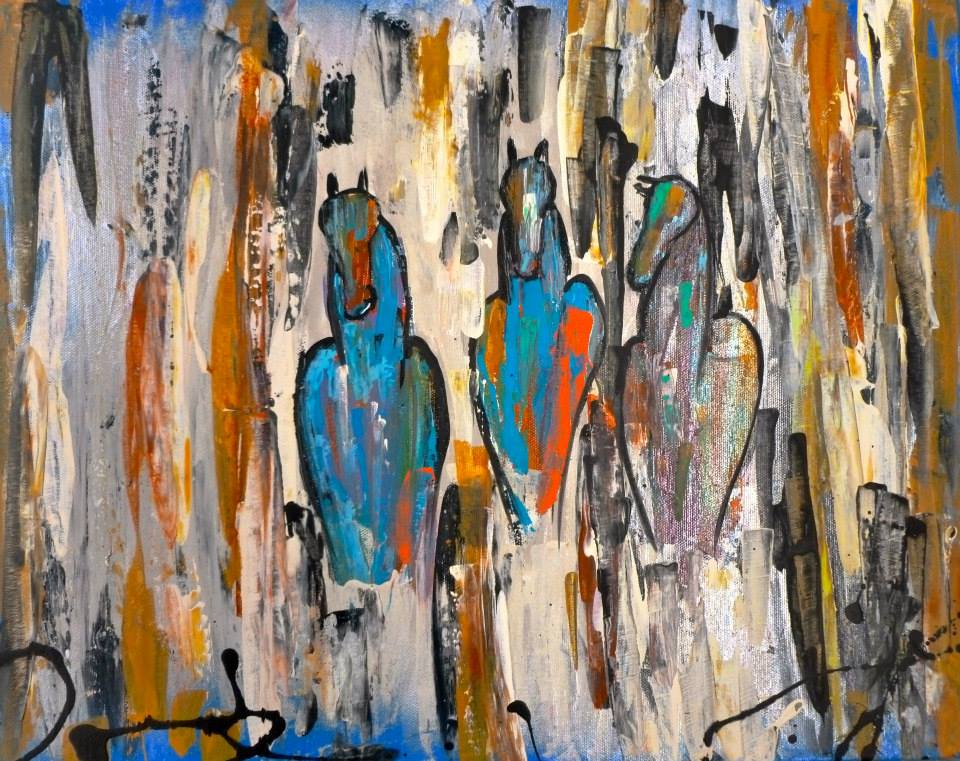
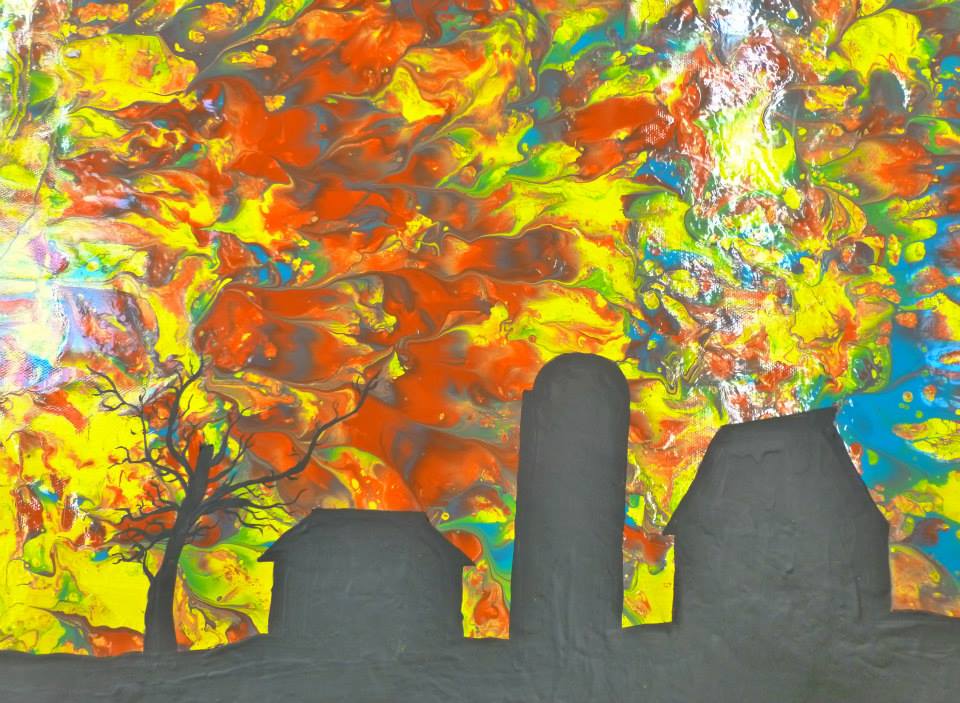
But this is also a global thing.  Because the artist, Kermit Pahkum McCourt, firmly believes that beauty should be accessible to everyone.  He prices his work accordingly,  and at his rate of production, there might just be enough to go around.

I don’t know what else to call this but a study in mind-blowingly talented generosity.

kermit 18

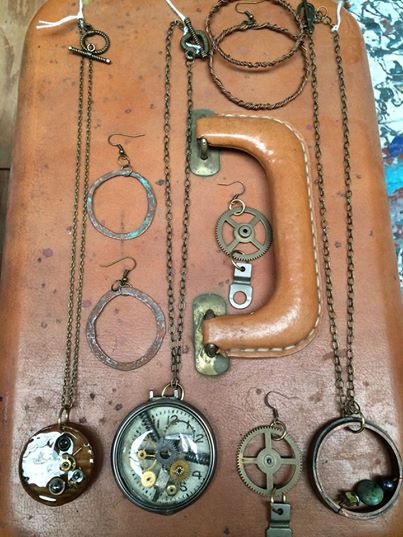
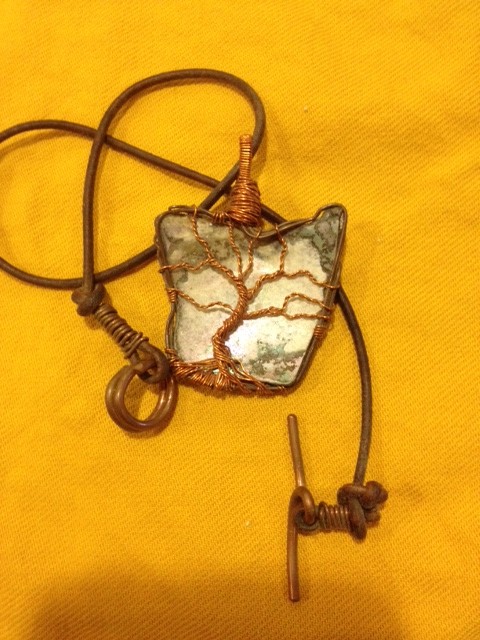
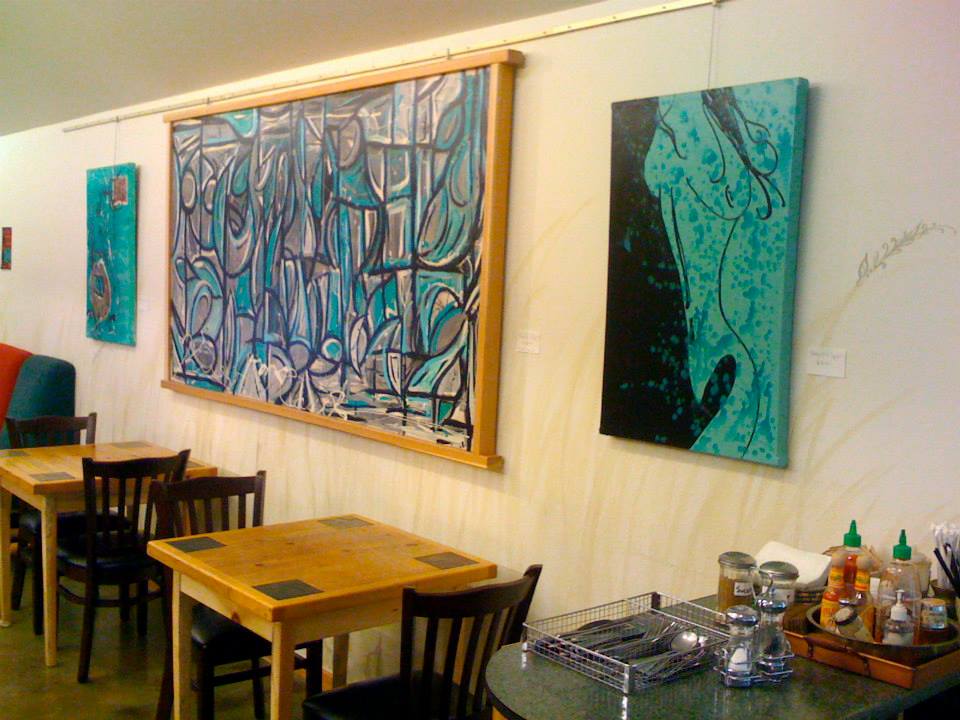
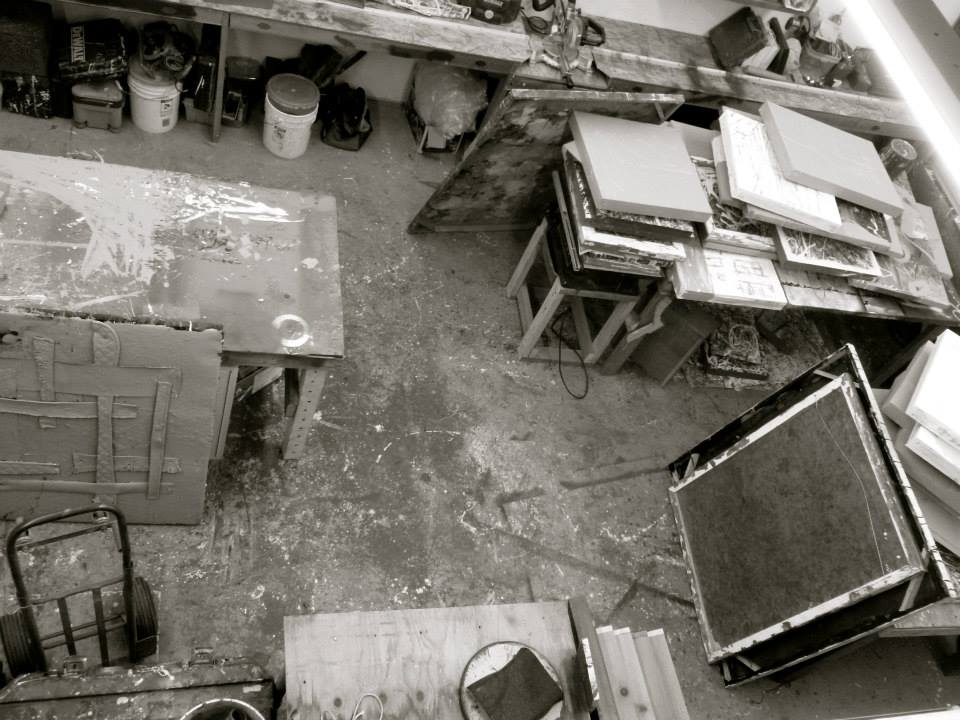
I remember when I first met McCourt, at his work space in an industrial area near a rural stretch of freeway.  He and his dog were there alone, surrounded by a breathtaking array of sculptures, paintings, furniture, garden installations and light fixtures.  Eventually he added jewelry to the list of things he creates beautifully.  I tracked down his work at the Flower Farm, a local coffee shop/ art gallery in my hometown of Loomis, CA, and gasped at the price tags.  In a good way.  Shock gave way immediately to the tingle of possibility at taking these wonderful things home to enjoy every day. There is no other feeling like it.

kerm 2

This is an old window. Glass is the canvas, and the original wood frame carries its job forward, beautifully repurposed.

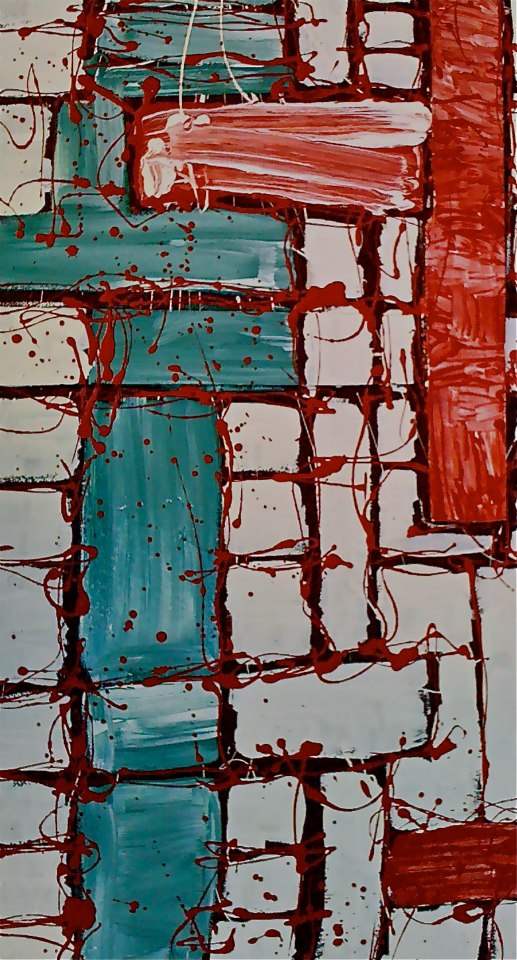
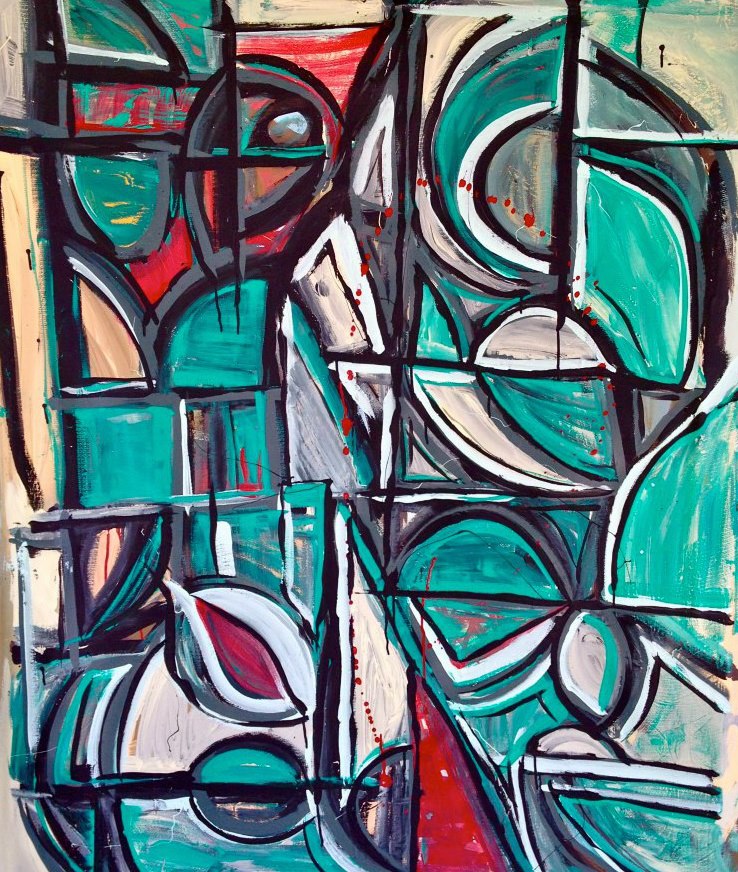
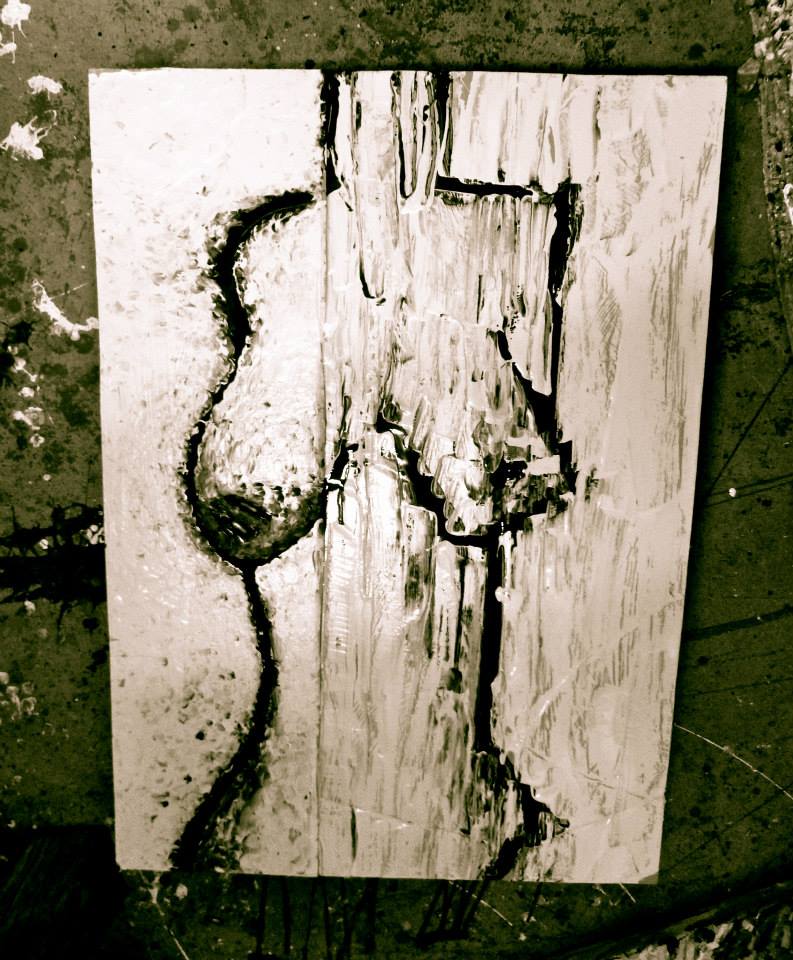
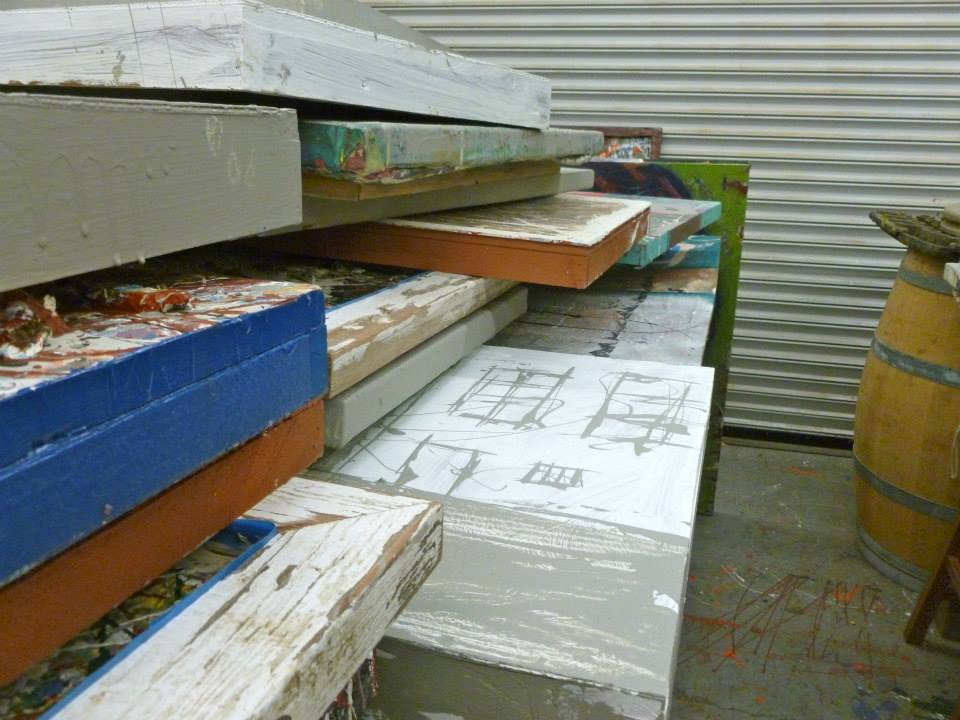
He only creates with things that are existing. Canvases can be old glass windows in frames, sheets of metal, rough slabs of wood.


kerm

This canvas is actually a piece of sheet metal. Its frame is old wooden barrel planks.

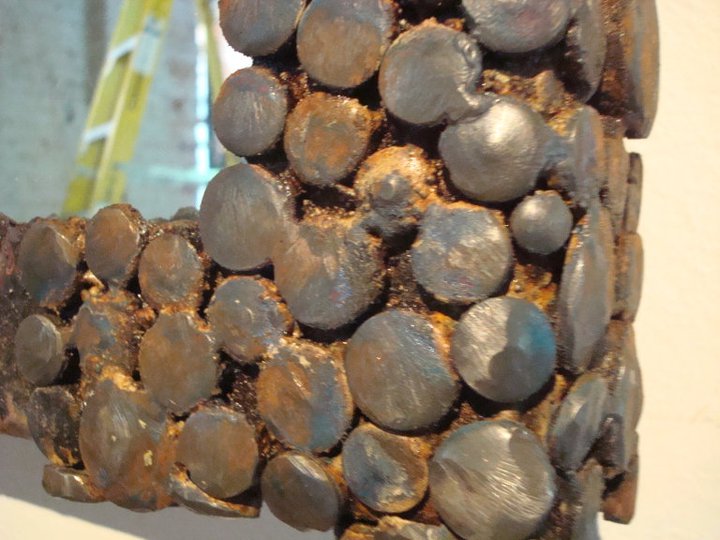
Everything he turns into beauty had a life before. There is no waste. There is only re-creation. You won’t believe what his eyes find in the jaded, faded, dented, twisted, rusted and discarded. That glorious approach to creation in a world that already has too many things, in a society that throws away without thought, deeply enhances the enjoyment of his work.

kermit 10kermit 4

He is prolific. Unbelievably productive. Diverse. Tangential. Pioneering. Constant. Copious. There is always, always something new and different coming out of his studio. Jewelry. Ties made of wood. Paintings. This is a good thing. Because wherever he displays his work for sale, it is gone almost immediately. And there is always more. All of it wonderful.

kermit 2kermit 3

What drives this fierce, powerful artistic engine?  How to account for so much beauty at such a furious pace?

“Personal freedom,” he says simply.  “While I’m painting I feel no pain.  I’m free.”

McCourt is fast and loose with the fruits of his pursuit of freedom.  They are meant for you and for me to have.  For a song.  With love from the artist.  In fact, you can identify his work by the trailing  signature at the bottom of the canvases, but also by the word ‘love’, which he usually scrawls somewhere on the back, out of sight when the piece is hung, but there like a warm secret nonetheless.

kermit 5kerm 3

McCourt was born in 1981 in Susanville Ca. His early childhood was spent in the high desert near Litchfield, which he called “rural living at its finest, (with a) generator to power the well pump, kerosene lanterns for light, and an outhouse.”

His father Mike McCourt is a general contractor, and the years McCourt spent working with him and learning the trade have profoundly informed his art.  He can transform a piece of wood into anything, wire the light fixtures he builds. twist scrap metal into beautiful and massive sculpture.

kermit 15

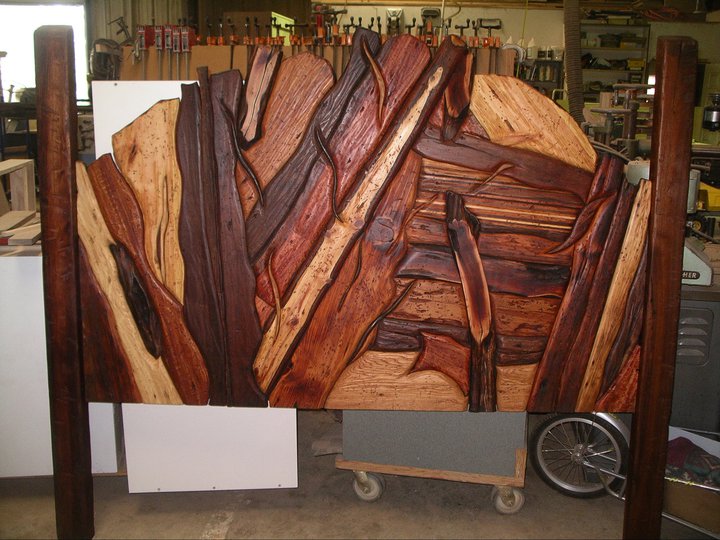
A headboard fashioned by McCourt from scraps of wood.

“I could swing a hammer ever since I can remember what a hammer looked like,” McCourt says simply.

His mother Marlene Kramer remains one of his most ardent fans, with a home tastefully full of his art and furnishings.  She let him completely remodel her kitchen when he was quite young, and the cabinetry he designed and built is a thing of functional beauty.

Later, when McCourt moved to Placer County, he continued to work with his father when he wasn’t roaming the countryside with friends, enjoying the kind of partially feral childhood that is a cultural relic in these days of sedentary electronic usage, organized sports, and hyper-protective parenting.

Interestingly, he and his friends used to poke around the abandoned fruit packing sheds that are today a busy hub of galleries and artistic shops in downtown Loomis.  It is here, in the High Hand ‘sheds’, that McCourt will be opening his own gallery on Friday.

McCourt attended Del Oro High School just up the road from the fruit sheds, where he took his one and only art class with teacher John Bowler.

kermit 6kermit 1

After graduation, McCourt tried a brief stint at Butte Community College in Chico, but he was restless.

“I hated college,” he says.  “The only course I liked was Badminton.”

Instead he studied for and passed the test to become a general contractor.  He started a contracting business with brother Quincy McCourt, and he held out for three years before giving in full time to his artistic destiny in 2009.

From the beginning, McCourt’s work was a hit, selling out at the Flower Farm, High Hand, and Beatnik Studios in Sacramento as fast as he could produce it.

kermit 12

Close up of a piece on display at Beatnik Studios in Sacramento.

After two years, he realized he was making a living as an artist.  “But the goal was never the money,” he says.  “The goal was to get the art to the people.”

kermit 17

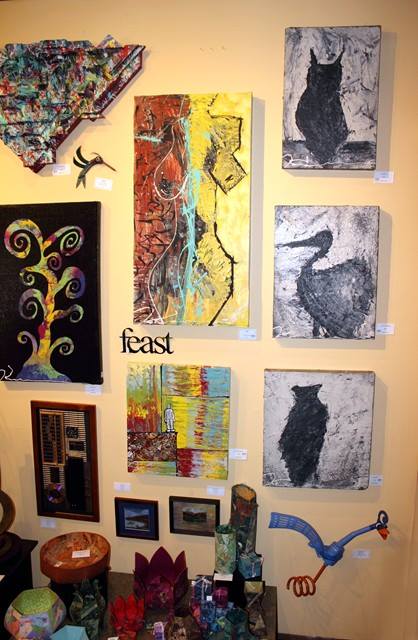
McCourt’s work on display at the High Hand Artists’ Cooperative Gallery, before he had a space to call his own.

Last year, his eyes craving new vistas to paint, he packed up his paints, his welder, brushes, jewelry making tools and wood-working equipment, and hit the road, travelling cross-country for ten months, working every leg of the way.

kermit 14kermit 16

“That was my starving artist phase,” he says.  “I sold my car, sold tools I could live without, made arrangements for my horse, did two garage sales, and bought a truck and fifth wheel trailer.”

Supporting himself on the road was hard, he said.  He sold his work at farmers’ markets, flea markets and other local venues.

kermit 11

The artist’s work on display during last year’s cross-country odyssey.

He painted up a storm, made jewelry, and  took some time to ‘watch the whales migrate’.

profile 3

McCourt and his constant companion, Mahkahnah.


He came home with a lot of work completed, and a renewed energy to produce more.

kermit 7kermit 9

You can see some of it Friday, April 4th at the ‘soft opening’ of his gallery at High Hand from noon to 5 p.m.  The official opening is May 3rd.  While you are at High Hand take advantage of the wine tasting there, pop into the gourmet olive oil shop, visit the other galleries and the sprawling nursery.  You can eat at the restaurant, which is located in a massive conservatory on the nursery grounds.  But whatever you do, go and see McCourt’s work.

For those of you not local enough to take advantage of his new venue personally, check out his Facebook Page.  If you see something you like, get in touch with him that way.  Enjoy. Tell your friends. Bring his art home. He wants you to.  He’ll make more.

kermit studio


How I Chased 11 Million People Away From Facebook

By Elizabeth Speth

twitter

Because of me, 11 million pre-teens, high schoolers and college students have fled Facebook.

I didn’t act alone, but there is social networking blood all over my hands because, for the last three years, young people have been fleeing old people in droves on this platform.  They are running from my demographic.

I and my ilk ruined everything.  Moms.  Dads,  Aunts.  Grandparents.  We knew a good party when we saw it.  We ‘liked’ it, we joined, and the party was immediately over.

facebook 1

In a spectacularly self-destructive move, it was my daughter who first talked me into joining.  I was an anti-Facebook snob until she set up an account for me one day as I snoozed next to her on the couch.  And it was brilliant.  A huge time suck, but brilliant.  I posted pictures of myself (only the flattering shots), and of my children (when they were behaving and reasonably clean), my meals, my cocktails.  I took pictures of the garden, or at least the nice corners of the garden.

I may have shared some cute kitten pictures and videos.  I don’t remember.

I thought up witty posts and then checked them repeatedly  throughout the day, willing people to LIKE me.

And the whole time I didn’t realize we were hemorrhaging young people.  They were dropping like flies.  My children were sullen when I posted about them.  Furious when I finally figured out how to tag them.  They were getting disgusted, and I just didn’t see it.  I’m glad none of them ‘poked’ me.  I’m sure they would have drawn blood.

facebook 2

And still I just kept blundering along, multiplying my social media sins, knowing not what I did.  My friends too.  We told cute stories about our children, posted baby pictures, hinted that we still had romance with our spouses, talked about our hot flashes.  We asked our kids about what we read on their pages while they glowered at us.  What was the problem?  We were having fun.

facebook 3

I didn’t realize sending friend requests to all of Leland’s friends was a head-slappingly stupid move until I told him and he slapped his head.

“What were you thinking?” he demanded

So now I’m friends with quite a few of them, because they were too polite to say no, but they’re not there. Not anymore. Their pages are inert, gathering dust, last updated in 2011. Facebook is a ghost town, when it comes to young people.

They, in a migration to rival the infamous Trail of Tears, have sought refuge in places like Twitter, Snapchat, Instagram and some no doubt top-secret locations I will never know.

twitter 4

And until now, I have respected that.

Once I realized the magnitude of the destruction we’d wrought on Facebook, I was horrified, and I vowed I would stay there and give my poor children room to breathe, to enjoy their hard-won, post-exodus privacy.  I let my Instagram account wither, and slapped my hand every time it hovered over the Twitter app download button.  I wasn’t going to turn my poor offspring and millions of their displaced peers into refugees again.

twitter 2

I was meek, reprimanded, chastised, reformed.  Socially contained and completely harmless.

Until I went out to lunch with my college-age son Lyle, his buddy Brent, and my daughter Julia.  That was a game-changer.  A paradigm shifter.

Now I’m not sorry anymore.  The gloves are off.  So I can type better.

It started innocently enough.  We were chatting, laughing, catching up.  We enjoyed our Tower of Onion Rings and Hummus appetizers.  The boys had perfect burgers, thick and rare, with piles of thin fries on the side.  My lettuce wraps were excellent.

I may have had a martini.  I had a designated driver.  It was a small martini.  The glass wasn’t really even half full, so the second martini sort of made a total of one full drink.

Hey, there was a designated driver there.

On a side note, the martini was perfect. I’m particular about it being cold, and dry, with very good vodka, and the server relayed my instructions to the bartender perfectly.  The result was magical.

And then, as the server was clearing our plates.  I put my hand on her arm and I said something that didn’t come out the way it was supposed to.

It wasn’t inappropriate.  It was meant to be a compliment.

I just switched around two little words, something that could have happened to anyone, and Bam! there is my son typing up a storm on his phone.  Thumbs flew for a few seconds, and then he put it down on the table, a satisfied grin on his face.

“What?” I said.

“Nothing,” he answered, taking a drink of his Coke.   Smirking into his glass.

Later, when I got home, I got someone who is now in the Witness Protection Program to show me my son’s tweet.

” Mama Speth said ‘Tell the martini the bartenders were great.’   It’s not even 2 pm!’

Well, as it turns out, 55-64 is the fastest-growing age bracket on Twitter.  That’s not me yet, but I think I’m going to get a jump on things.

#Icankeepitto140characters

#hideyournaughtypictures

#mamaisfollowingyou

#Istillhavelotsofbabypicturesleft

#nowwheredidIputmyInstragrampassword

twitter 3


A Letter to my Children… About Love, Butter and Chicken Bones

By Elizabeth Speth

chicken 2

Dear Julia, Lyle and Leland:

As you know, your mother has been a vegan for more than two years now.  For health reasons primarily, I switched to a plant-based diet two years ago, and it’s working out very well.

But you also know I love pork products.  So much.

You know how I feel (very, very good) about raw oysters and a smear of bone marrow on crusty, buttered bread.  You still hear me talking about hamburgers, thick and rare, smothered in brie and bacon. And cheese…lordy, do I love cheese.

chicken 12

So I just want to thank you for giving me the opportunity to cook for you, you beloved carnivores, while I virtuously scarf down my legumes.  Because of you I still make cream sauces, rare meat, cheese plates, buttery desserts.  Because of you the kitchen still fills with the smells of these foods.

But there is something you may not know, because I have tip-toed around telling you for years.  In my defense, you spent the last decade as prickly adolescents who did not welcome a lot of gushing on the part of your mama.

I don’t hold that against you.  It was as it should be.

And now, you are all grown, and our conversations are filled with logistical questions.  When will we see you?  How is school going?  Are you getting enough rest?  What are your plans for the future?  

No wonder you don’t always want to talk.

So what I haven’t told you is that I cooked for you — then and now — as a way of saying how very much I love you.  That I hope the world will always be a warm place for you.  That people will be careful with you.  That you will be strong and nourished and understand that life is both work and pleasure, sometimes all in the same meal, as it were.

That, having eaten so many of the same meals, you will stick together. At least in spirit.

I wanted you to know that life is uncertain, with dark places that you must avoid.  That people — from your loved ones to your leaders — will switch loyalties.  That we live in a world where entire planes full of people can just disappear.

I cooked to comfort you.

When you needed it, and when you didn’t, because I wanted you to store up an entire lifetime supply of comfort. I wanted you to draw upon it as needed, long after the pancakes and pastas.

chicken 5

Now that you are rarely home for dinner, I realize it is time to give you a tool or two going forward to comfort yourselves.  I expect you to share this with your friends.  Share it with all the people you love. Some of them will hurt you.  Share anyway.  I want to give you one of the most basic life skills ever, and I hope it will help.

chicken 1

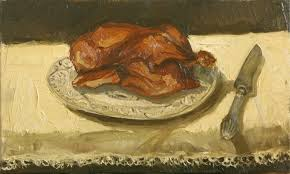
I want you to have the perfect roasted chicken recipe.

Everyone should know how to cook one.  But you will be among the few who do.  Consider it an embrace from me.  The day after you cook it, you can have sandwiches and chicken salad (hug!).  The day after that, put what’s left of that gorgeous carcass in the pot and make chicken soup (kiss!).

Now, before you get started, I acknowledge that you three spend hours in the gym on a regular basis to get the kind of lean body mass that eats skinless chicken breasts and brown rice.  It’s working.

The world never saw three more beautiful people.

But, at least once a month, you ought to cook chicken the way it was meant to be, under skin and on the bone.  Put a little butter on the skin (yes, that’s right, I said that), because life is about moderation in all things, including moderation.

You should be immoderate, a little, now and then.

As you bite into a crackling skin and meat so tender and complex it obviously had a long conversation with marrow during the cooking process, remember that your mother loves you.

chicken 6

You will need:

Salt and Pepper
One young roasting chicken
Butter – 1 cube, plus a basting brush
1 Lemon
1 Head of Garlic, unpeeled
Thyme – 1 bunch
Fennel
New potatoes (small red), or sweet potatoes peeled and cut into large cubes
Carrots, cut into large, rouch chunks

Pre-heat oven to 350. If your oven is not efficient, or does not hold heat, turn it up to 375.

Empty neck and liver, etc. out of center of chicken and discard. Just get in there and do it. Rinse chicken and pat dry. Sprinkle salt and pepper inside the cavity. Put butter on stovetop to melt, or into microwave. Do not burn or allow to brown.

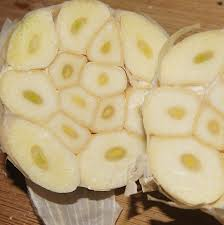
Cut the lemon into four parts. Put TWO into the cavity of the chicken. Cut garlic head in half across center, exposing as many of the cloves inside as possible by cutting them through the middle, like this:

chicken 11

Put half into cavity of chicken. Put other two pieces of lemon into cavity, followed by other half of garlic head. Stuff sprigs of thyme in after, as many as you can fit in. They will be partially sticking out of the cavity. Place the chicken in a roasting pan. Brush very thoroughly and thickly with melted butter, getting it into every nook and cranny and crevice. GENEROUSLY salt and pepper the chicken. Most of the salt and pepper will run off into the vegetables, so don’t spare the seasoning.

Tuck the wings up against the body so they won’t burn. Truss the chicken by tying the ends of the drumsticks together with kitchen twine. That’s all you have to do in terms of trussing.  Just tie the two ankles together.  This keeps the drumsticks from burning, and the chicken from cooking too fast.

We must plan ahead to preserve the things we love.

Rough-cut the fennel, potatoes and carrots into large chunks. They should all be the same size. Arrange them around the chicken in the dish, nestling them firmly against the wings to keep them next to the body. If you have leftover butter, drizzle it over the vegetables. Put into the oven, and forget about it for at least an hour.

Just step away and let it happen. You’ve done everything you should have.

chicken 3

Remove the chicken from the roasting pan after at least an hour. The skin should be uniformly brown, the legs should move easily, and the liquid should run clear when you stick a knife between the drumstick and the body. Cover the chicken with foil and let rest for twenty minutes. Turn the oven up to 425, toss the veggies in the pan to cover them in liquid, and put the pan back in the oven for the twenty minutes the chicken is resting to caramelize veggies, unless they are already pretty brown.

Enjoy the meat and veggies with the broth. There will be plenty of it.

chicken 10 You should eat this with a salad.  Dark, leafy greens like spinach and arugula.  They are so good for you.  Dress it simply — olive oil, lemon juice, sea salt.

chicken 7You should also drink white wine with this, something full and rich, with oak and a hint of mustard.  Because — I’m just being honest here — wine is good.

And you should also have dessert.  I have some very good dessert recipes.   But that’s another letter.

Very much love to each of you three (you will never now how much),

Mom

chicken 4

An Interview with Mystery Writer Laura Crum

By Elizabeth Speth

blog 1blog 2blog 3

Biblical history insists that Death rides a pale horse, but author Laura Crum, having penned a dozen murder mysteries against a backdrop of galloping hoofbeats, has taught us that such assumptions are foolhardy.  And she has schooled us deliciously.

Crum graciously agreed to an e-mail interview from her home near Aptos, California, where she grows ravishing roses, nourishes the local hummingbird population, enjoys a good whiskey sour, and rides horses on the beach with her young son, whose attention, alas, is beginning to drift toward two-wheeled transport.

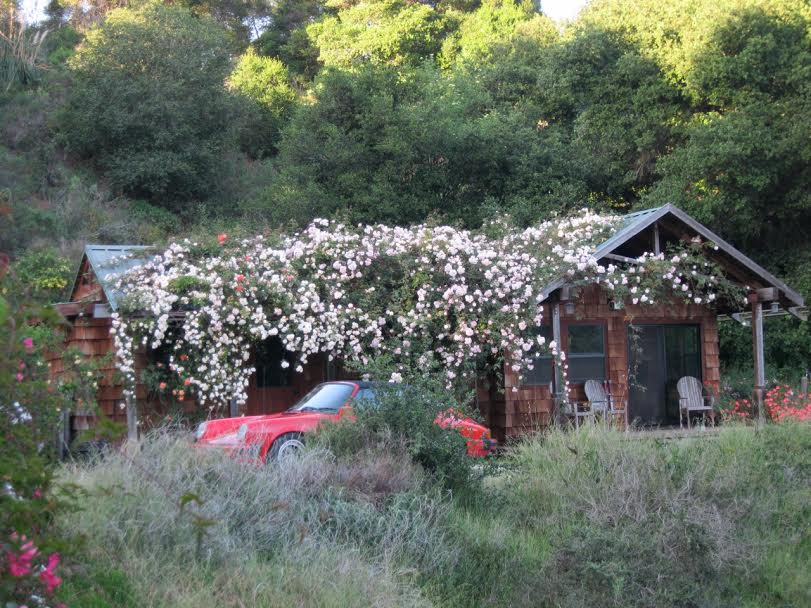
blog 6 (A shot of the Crum guest house, covered with welltended roses.)

Crum is a loyal friend.  The majority of her equine herd are ageing horses enjoying a well-earned retirement, lightly ridden on nearby beaches and through local forests.  This is just one reason, perhaps, that Crum manifests no regrets as she weighs in on an impressive body of published work.  She talks about her brilliant, strong-willed protagonist Gail McCarthy, an equine vet who often finds herself in the middle of murderous mayhem.  She is comfortable with the fact that tough, brave cowgirls don’t just fade away.  They become mothers and go through dark periods.  She speaks fondly of old ranch horses,  candidly about the state of publishing today, and revealingly of the small things in life that make us joyful.  She is a woman who decided to write what she wants to write.  She lives the same way.  From the heart.

Thank you so much, Laura, for taking the time to answer a few questions.  Would you please give us a brief biography?

Let’s see, I was born here in Santa Cruz County to a family that has been running a family ranch for four generations. I grew up riding my uncle’s horses out at the old ranch. He was a professional rodeo cowboy–a team roper–and this sort of sealed my fascination with the cowboy tradition. I did take riding lessons and learned to ride English and jump horses in my teens, but my true love remained working cattle on horseback. When I went off to Cal Poly San Luis Obispo (as an English major), I took along a horse that I’d broke and trained myself, and I trained several other colts while I attended that very horse-friendly college. Upon graduation I did not take a job as an English teacher (which I had trained to be), but rather went to work for a pack station in the Sierras, and then a commercial cattle ranch, followed by several years of working for a succession of horse trainers. Eventually I settled on cutting as my discipline of choice and hauled my horse, Gunner (I still have him today–34 years old this spring), all over the western United States to various events. We won a few buckles, but I burned out on the political aspect of the sport, and took up team roping (which is timed) in my thirties. Gunner made the transition to team roping horse at about the same time that I made the transition from training horses to writing novels.

blog 5(Laura and a strapping young Gunner.)

I had always loved the novels of Dick Francis, and when I realized that I was not getting any younger and I really didn’t want the stress of training young horses any more, I decided to try writing a mystery series in which I would use my background in the western horse world much as Dick Francis had used his background as a steeple chase jockey to create his mystery novels. And thus Cutter, my first book (revolving around the world of cutting horses), was born.

At what point in this biography did you know you wanted to be a writer?

From early childhood I knew that I loved to read and write. I always assumed that I would be either an author or a horse trainer.
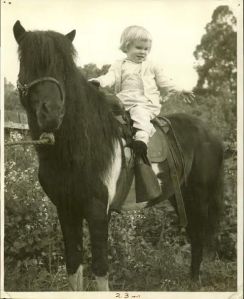
blog 4(Laura, already knowing exactly what to do with her life.)

Horse training came first, and when I got to the end of that, I began with the novels. Trust me to choose two professions that have failed to make me rich!

Your heroine is equine veterinarian Gail McCarthy. What is your relationship with her? How much of Gail is Laura Crum, and how did you decide who she would be and then go on to animate her so effectively?

I created Gail in a conscious way–basing her physical appearance on my best friend, and her history on another friend (male) who became a vet. I gave her my own opinions, by and large. Over time she became much more like me. In the early books, not so much. I did give her many of my own experiences and the background of the novels comes straight out of my life.

You’ve published quite a few books. Twelve that I know of. Describe writing your first book and the process of getting it published.

I wrote Cutter long-hand in a series of spiral bound notebooks, often sitting in front of the barn while the just-bathed Gunner dried in the sun, or in the pickup while waiting my turn at a team roping. It took me six months to write the first draft, and several years and many rejection notes later, an agent agreed to take me on. Then followed another year of rewrites–the agent was a former editor. At one point she told me that she didn’t like the plot, she didn’t like the protagonist, she didn’t like the villain and she didn’t like the tone. When I asked her what she did like, she said that she liked that it was about horses and it was set in Santa Cruz (!) So you see, I had a long way to go. After this year of constant rewrites my agent began sending the book out to publishing houses, and after ANOTHER year and some more rejections, Cutter was bought by an editor at St Martin’s Press. This was sort of a surprise, because I had always imagined the book as a paperback original, but it was actually chosen by a very respected mystery editor (Ruth Cavin) and came out in hardcover.

All artists are in awe of The Creative Process, I think. Some regard it as an angry god that must be appeased and humored. They are almost superstitious about it. You are a very prolific writer. What is your process?

This is a hard question to answer. To begin with, my process looked a lot like imitating Dick Francis, using my own background. I wanted to write about cutting and ranching and team roping and breaking colts and horse packing…etc, and I used the form of the mystery novel to do it. Whenever I got stuck, I would open a Dick Francis novel and see how the master approached this sort of dilemma. My first two or three novels really show this influence.

Over time I learned to write to a deadline. I never had a regular writing schedule–I’m not that disciplined. However, after my first novel, I had a contract (and a deadline) for all subsequent novels. As the deadline got closer, I’d push myself to get it done. I also learned that feeling “inspired” doesn’t always make for better writing. Some of my best writing came from periods when I was just slogging along, getting it done. I also learned to wait. To let things percolate. Sometimes the answer would just come to me and THEN I would sit down and write.

After quite a few years of turning out mystery novels (I wrote these twelve novels over a twenty year period), my writing became far more about expressing small insights that I wanted to share, and less about trying to write the sort of books that I thought would “sell.” And, quite predictably, I never became a “best seller.” But I did learn to write in my own voice, and no longer needed to imitate other writers.

Publishing has changed so much in the last decade. The word ‘changed’ is inadequate. What are your thoughts on this? What are the challenges authors face today?

Yes, it is SO different from when I started. Then you had to get an agent and your book had to be bought by an editor. “Self-published” was a dirty word and such books were never successful. Editors almost never bought unagented books. And it was terribly hard to get an agent because legitimate agents worked only on a commission basis. Thus they really had to believe in your work before they would take you as a client. And, of course, there were (and are) always an infinite amount more folks wanting to be published than traditional publishing would take on. So the agents and editors weeded out what they deemed the good from the bad. It was really hard to “break in.” (See my story about publishing my first book.)

Now self-publishing is a viable option (though these writers prefer to call themselves “indie authors” I believe). I’m not sure what I think about this. I can tell you that putting my backlist (which was out of print) up as Kindle editions has been quite a nice thing for me. I get a check every month, far more than I used to earn in conventional royalties. But I definitely tend to shy away from all the “indie” books out there. I know some are good–I just don’t know how to sort out the good ones.

We must talk about the horses. They’ve been, and are, a very large part of your life. They are a large part of Gail McCarthy’s life. Can you speak to the relationship between (wo)man and horse in general terms, and in your own experience?

I’ve always been passionately drawn to horses. My earliest memory is of being put on a horse with my uncle and loping along in the saddle with him. Ever since I was first allowed to buy a horse (with my own hard-earned money at the age of fifteen), I have always owned horses. I’ve never lost interest in them, though my life has gone through many changes. I no longer compete on my horses or train horses, but my son and I still trail ride together on our steady mounts. And I still have my two older horses that I competed on for so many years–they are retired now. Gunner (34) and Plumber (25) are featured equine characters in my novels, and Sunny and Henry (our two current trail horses) come into the last two books (Going Gone and Barnstorming). Our much-loved pony, Toby (now deceased and buried here) is featured in Chasing Cans. My life, like my books, has been very much about horses, and I am still passionate about them, although these days living with my horses here on our property probably means more to me than any other aspect of my horse life.

I think there are many women (and a few men) who, just like me, have been passionately drawn to horses all their lives. Some, like me, have been lucky enough to live out their dream. I wrote my novels to all these other horse lovers, including those who never quite had the life with horses that they dreamed of.

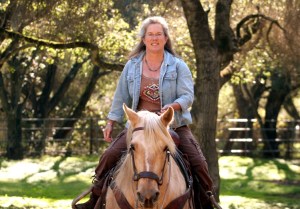
blog 8(A portrait of the artist in her element.)

What are your writing projects going forward? I know you publish a weekly equestrian blog (it’s marvelous). Do we fans have any Laura Crum projects to look forward to?

I love writing blog posts on the Equestrian Ink Blog. It’s so much easier than writing fiction (at least for me). I probably never would have started my own blog, not thinking that anyone would be interested in my day-to-day thoughts. But having been invited to join Equestrian Ink several years ago, I have really enjoyed writing posts and connecting with readers.

I always meant to write a dozen novels in the Gail McCarthy series, and that goal has been accomplished. I’m not sure if I will write more books about Gail–so far it feels good to end the series at book number twelve–Barnstorming. I recently finished a brief memoir about my real life history with horses that is meant to be a companion to the mystery series. I plan to have it up as a 99 cent special on Kindle in the next few months. My latest writing project is an essay I wrote just for myself–about the magic I’ve experienced in my life. Not sure if I will publish it or not. But it was an interesting experience to write something that I wanted to write just to please myself.

One of my personal favorites among your books is ‘Slickrock’. It reminds me of some wonderful experiences horsepacking in California’s wilderness areas, which are of course renowned for their slickrock. Do you have a favorite amongst your wonderful stories?

As many authors say, it’s like trying to pick your favorite child. All the books are special to me for one reason or another. I think I improved as a writer quite a bit after my first novel–Cutter is definitely a slightly more amateurish book than the others. Slickrock (number five in the series) is the overall reader favorite, that is for sure. It is a book that I really enjoyed writing, and much of the material in it comes from journals that I wrote while horse packing and camping in those mountains. The sixth book, Breakaway, is probably my darkest book. People either love this one or hate it. The last four books (Moonblind, Chasing Cans, Going Gone and Barnstorming) deal with my protagonist getting married, getting pregnant, having a baby and raising a child. As some of us know firsthand, these are huge life experiences, and I wanted to write about them (there are lots of horses and danger in these books, too–I promise). These “mama” books are very special to me, but I am quite aware that many readers preferred my heroine as a single, tough-minded veterinarian rather than a mom. But you can’t please everybody, and in the end I chose to write what I wanted to write. All my books come from the heart.
blog 7

Schooled By A Short, Disheveled Historian

By Elizabeth Speth

blog history

I’ve told this story before.  It’s a mark of old age when we start repeating our stories.  But this post is about history, so there you go.

My neighbor’s grand-daughter is visiting. She is about eight. She played all afternoon in the field next to my south pasture, loud and happy to be alone with her imagination. She was an entire school yard of energy and noise. It was glorious — exactly what our neighborhood has been missing.   I lingered over my manure scooping to absorb the joy.

blog running in field

After she emitted a particularly loud series of whoops, I set aside my pitchfork and waved at her over the fence.

‘Are you okay?”  I called.

She galloped over on an invisible pony, face smudged with dirt and hair disheveled from flying behind her all day, trying to keep up. She narrowed her eyes and gave me the ‘so you’re the crazy neighbor‘ stare.

“Have you lost a limb?” I asked.

“No”, she said.

“Well, what was that noise?” I wanted to know.

“It was a war cry,”  she said.

“A war cry,” I repeated.  “And how does that work, exactly?”

“I make the noise, and everyone comes to fight. Indians, soldiers, cowboys, everyone,” she said.

I gave this some thought.  I know from experience that what a child deems worthy of saying deserves consideration, which makes conversations a minefield if you are not on your game.

“So…” I began respectfully.  “They all of them just know to drop everything and come with weapons drawn when you do that?  I mean, it’s just the one cry for all of them?”

“You don’t know much about history, do you?” she asked me, narrowing her eyes still more.

I allowed that what I knew of history was perhaps not as useful as what she had learned.

She wheeled her imaginary war horse, talking to me over her shoulder as it pretend-danced and pranced.

“I don’t have time to explain it all to you,” she said. “Time to fight!”

And off she went.

blog girl with horse
I hope she made it through battle without injury.

I hope her steed was brave and true.

And I hope she stays this age for about three more decades.

Me?  I go back to shoveling poop, which is the fate of those who do not pay attention to history.

blog pitchfork


A (Very) Little Water With The Wine

By ElizabethSpeth

This is not my photo.  I am too dehydrated to take pictures.

This is not my photo. I am too dehydrated to take pictures.

It is no secret that California is gasping in the second year of a severe drought. The Golden People have ticked off Mother Nature, or maybe she is just distracted.  Whatever the reason, we have received only a third of her usual attention in terms of precipitation. Some of our reservoirs hold a muddy 20 percent of capacity. According to the National Weather Service, Sacramento should be swollen with nearly 13 inches of rain by now. We have measured and measured again, and can count barely five.

And things were nearly as bad last year. We are in dire straits. There will be no vegetable gardens. There will be filthy cars and crackling brown lawns. There will be wildfires.

But we are grateful. We are celebrating.  Because there is good news.

Also for the second year in a row, California harvested a bumper crop of wine grapes. The same dry conditions that have rivers shrinking and cowering in their beds are perfect for wine grapes. Cabernet and  Zinfandel, those big, beautiful masochists, embrace barren, rocky soil and harsh sun.  They hunker right down and yield for their suffering lush velvet and opulent fruit on the tongue.  Who needs any other crop?

Food?

Meh.

wine 5

Wine grapes are, of course, one of California’s top commodities.  Last year’s crop rang in at $3.16 billion, according to the California Association of Winegrape Growers. The California Department of Food and Agriculture’s preliminary figures show that the crop of red and white varieties combined weighed in at 4.23 million tons in 2013, up 5 percent from 4.02 million tons in 2012. Even more good news: 2012 was also a bumper crop year. So, though we are in a water crisis, we see before us a wine glut.

wine 2

And, because Mother Nature has her priorities straight, experts say there is still enough water left in the soil for the grapes this season. For now.

So don’t feel sorry for California. We are fine. We live in the state where waiters automatically bring glasses of wine to your table with the menus, and then ask if you’d like to order water.

wine 1

Sure we’re taking fewer showers, but who cares? Everyone knows it’s very hard to drink wine in the shower.

wine 3

Do not pity us as we lurch around, pinched of skin and purple of teeth, our empty swimming pools converted to wine cellars.

wine 4

We aren’t thirsty, my friends. We are complex and fruity.

wine 6
In fact, life for us would be perfect if those wine folks would finally start making bottles big enough for two people to share.

Look For The Helpers

By Elizabeth Speth

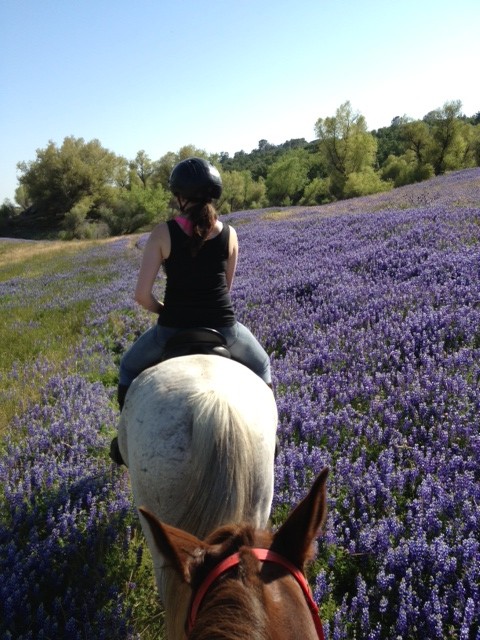
Riding through lupine with Julia

Riding through lupine with Julia

Wildflowers in the yard...

Wildflowers in the pasture…

“When I was a boy and I would see scary things in the news, my mother would say to me, “Look for the helpers. You will always find people who are helping.” — Fred Rogers

Life is an ugly mess. I mean, it can be. Everywhere you look, there is poverty, greed, avarice, cruelty. Natural disasters. Sustained suffering. Loneliness. Children sometimes die before their parents. I don’t have everything I want. Maybe you don’t have anything you want. See what I mean? Don’t you feel terrible after reading this paragraph?

There is hope for us, though, in perspective. As Jose N. Harris said:

“Some people live in a bitter, angry, hate-filled world.
Some people live in a friendly, caring, love-filled world.
Same world…”

For me, the key to finding happiness in the maze of muck outlined above is gratitude. And for me, the key to gratitude is finding beauty. In everything.

For instance, I am a manure manager. Forget about my actual profession. What I actually spend the most time doing in my life is managing waste. I have four dogs, five horses, three cats, and three grown children whose bowel habits were once my daily concern. I know from poop.

But some of the most beautiful moments of my daily existence are in the transition hours of sunrise and sunset, when the horse manure scooping business is booming. Whether I like it or not, every day, I am out there watching Mother Nature’s creations stir and wake, or settle for slumber. What a gift. Thanks, excrement!

Even in the worst disasters, the most wide-spread suffering and pain, you will always find people who are helping. Those are the beauty. This blog is my gratitude journal. A list of beautiful things in this mostly beautiful life. Horseback rides like the one with my daughter Julia in the picture above, wildflowers in the pasture, beautiful meals, a strong, hot cup of tea, a thought-provoking book or quote, fabulous puns — everything is fair game. If we can keep our perspectives straight.

I hope it helps. I want to be one of the helpers.